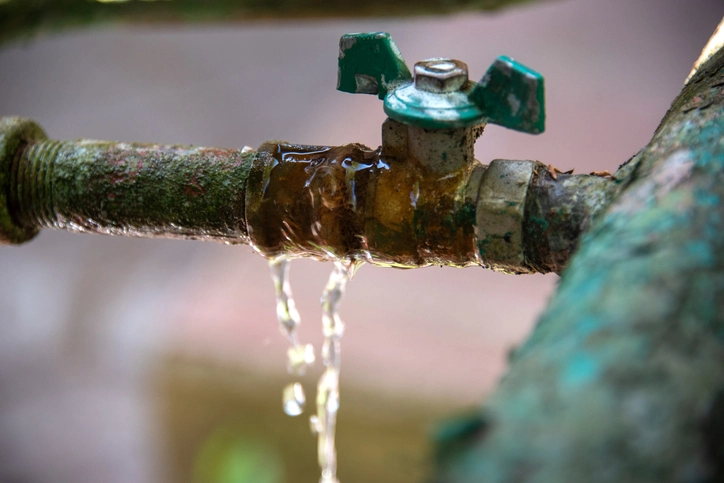
In 2024, a major storm caused widespread damage to homes and properties across central and eastern Victoria, generating over 4,000 requests for emergency assistance with buildings and debris within just 48 hours. (Source: vic.gov.au).
Water and flood damage are common challenges across Australia. Many homes and businesses suffer significant disruptions due to these events. If not addressed properly, they can lead to long-term structural problems and other water-related issues.
In this blog, we’ll walk you through the step-by-step water restoration process. We will explain why expert help is essential, and show you how water restoration works to bring a property back to life after a water disaster. But before diving into that, it’s important to understand what water damage restoration involves.
What is Water Restoration?
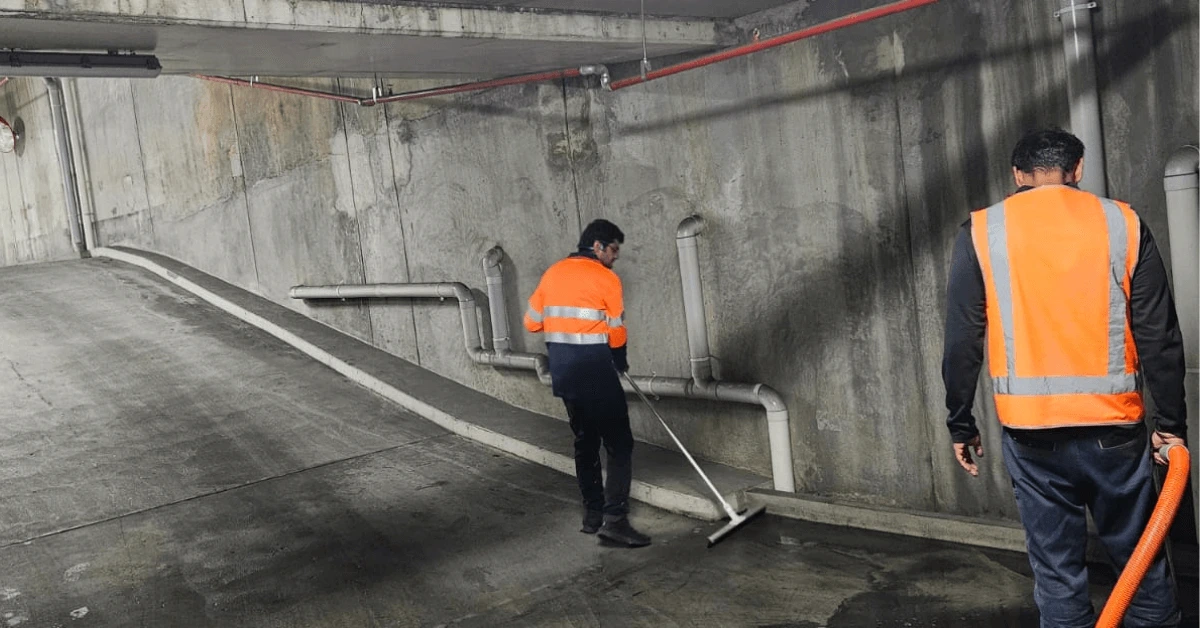
Water restoration is the process of repairing and restoring a property damaged by water from floods, leaks, or storms. It involves removing excess water, drying and dehumidifying affected areas, cleaning. It also is also sanitising surfaces, and repairing any structural or timber damage. In this, the goal is to return the property to a safe, healthy, and functional condition. While preventing future issues such as mould or weakened foundations.
What Are the Causes of Water Damage?
Water damage can occur for many reasons, from natural events to household issues. Common causes include heavy rains and floods, burst or leaking pipes. It also overflowing sinks or toilets, roof leaks, and malfunctioning appliances.
Related Blog: 5 Top Causes of Water Damage and How to Avoid Them
What Are the Different Types of Water Damage?
Understanding the type of water damage is critical, as it determines the safety measures and cleaning process required. Water damage is categorised based on the level of contamination and risk. Clean water comes from safe sources like burst pipes, grey water is slightly contaminated from appliances or sinks. Black water is highly contaminated, often from floods or sewage.
Why Water Restoration is Important?
Ignoring water damage, even when it looks minor, can have long-lasting consequences. Water restoration is crucial. Because water damage can quickly lead to mould growth, structural issues, and health hazards if not treated properly. Acting promptly with expert help prevents long-term damage. It protects both your home or business and the people inside.
Why DIY Isn’t Enough for Water Damage?
While it might seem possible to handle small leaks on your own. DIY methods are rarely enough for larger water damage situations. Household fans or basic cleanup can’t remove water hidden deep in walls, floors, or foundations. This often leads to mould outbreaks, lingering odours, or unseen structural issues.
Why You Should Hire a Water Restoration Expert?
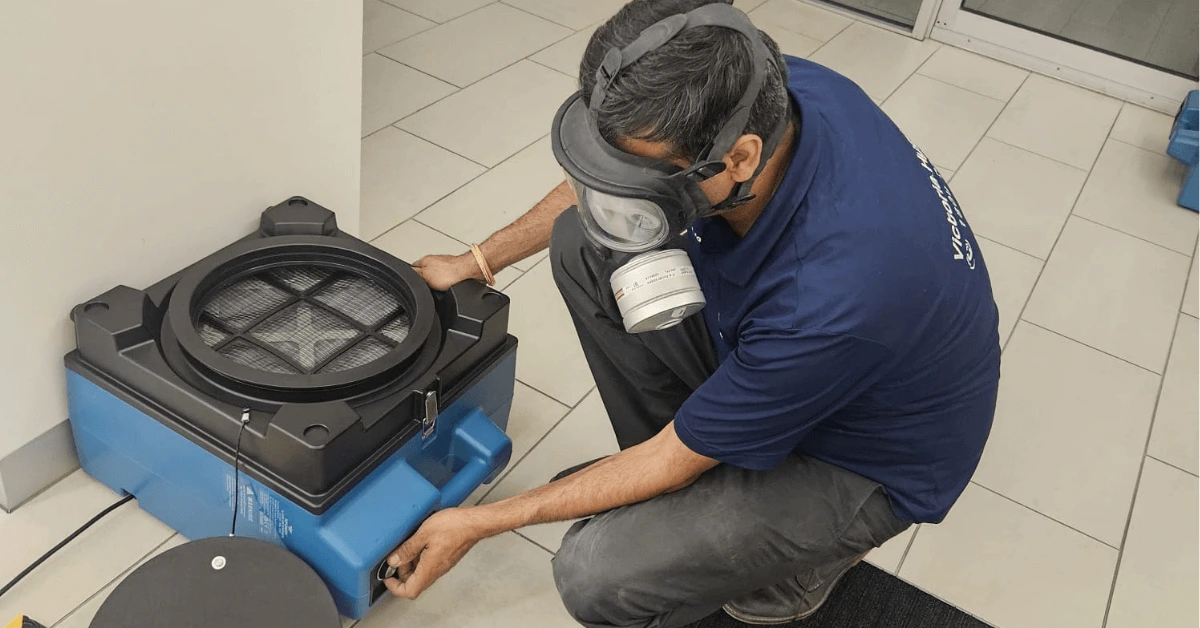
Hiring a water restoration expert ensures that damage is accurately assessed and properly repaired. Professionals use advanced equipment to remove water, dry affected areas, prevent mould growth, and restore structural integrity. Their expertise saves time, reduces long-term costs, and provides a safe, permanent solution.
Step-by-Step Water Restoration Process
Restoring a property after water damage is not just about drying the visible areas. It’s a step-by-step process that ensures safety, prevents future issues, and brings the property back to its original condition. Here’s how water restoration works:
Step 1: Initial Inspection and Safety Check
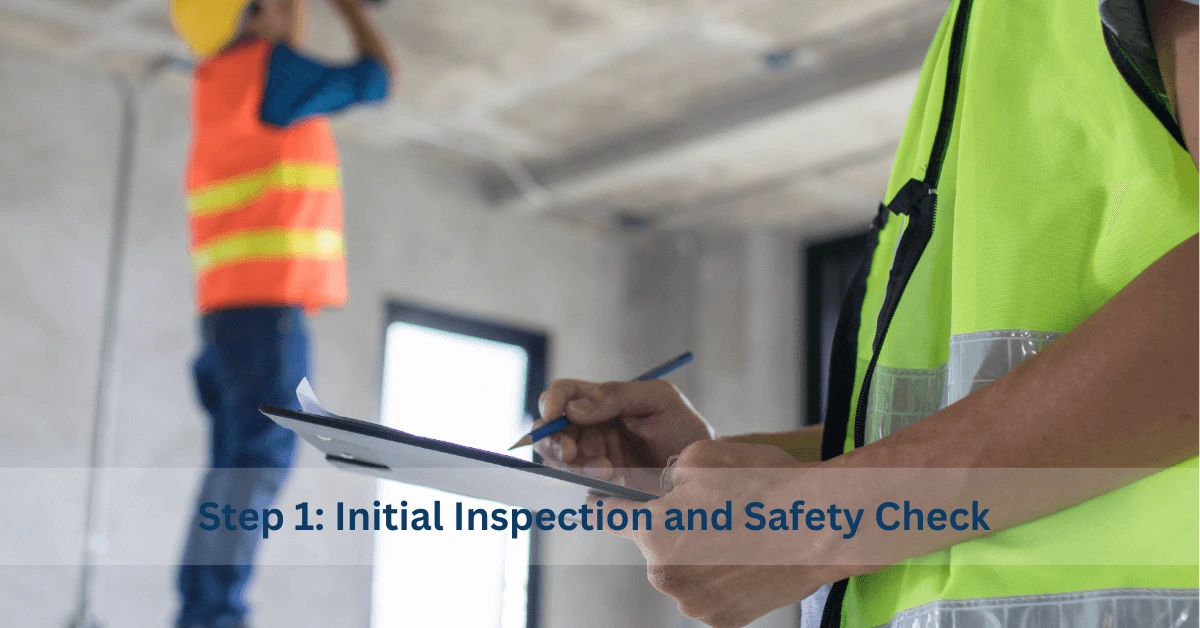
The restoration process begins with a detailed inspection to locate the source of water damage and assess how far it has spread. Whether it’s from a leaking roof, a burst pipe, or flooding. The professionals work to stop the source immediately to prevent further issues.
At the same time, safety checks are performed to rule out risks such as electrical hazards, unstable structures, or contaminated water. By identifying both visible and hidden dangers early on, experts ensure the property is safe to enter. So, the right water restoration plan is put in place from the very start.
Step 2: Water Removal and Extraction
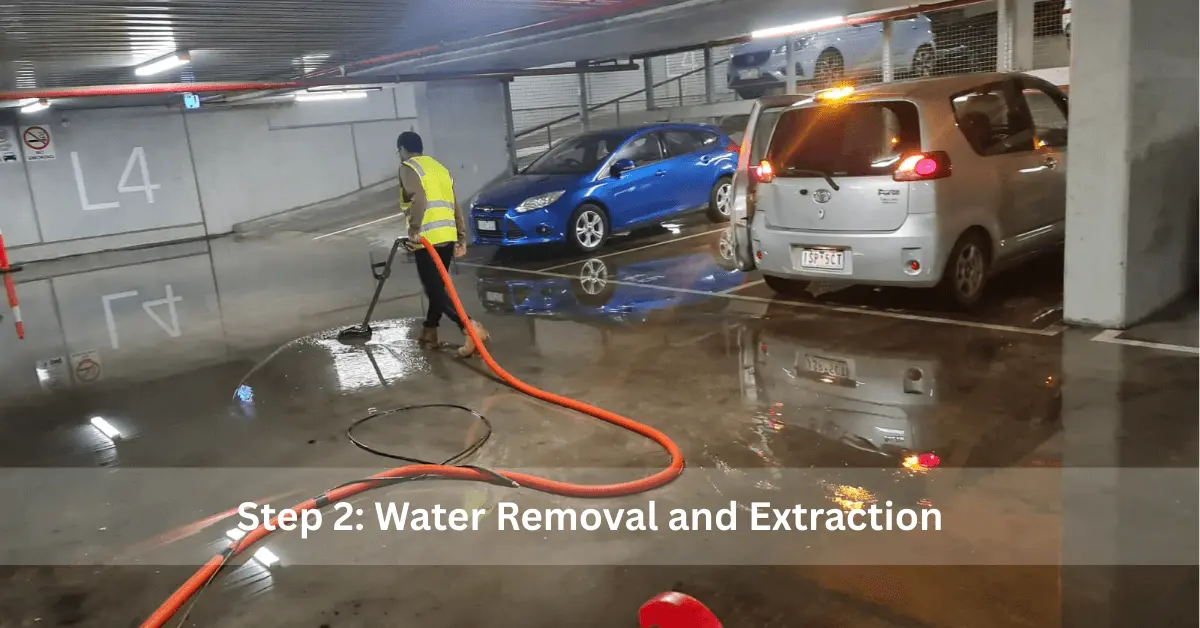
After inspection, the most urgent task is removing standing water. The longer water sits, the deeper it seeps into carpets, flooring, drywall, and even structural materials, causing costly damage and creating the perfect environment for mould growth. Professional teams use submersible pumps to drain large amounts of water and industrial vacuums to remove smaller pockets, followed by moisture meters and thermal imaging to detect hidden water that isn’t visible.
Water extraction is time-sensitive; delays of even 24–48 hours can lead to mould, warped flooring, damaged furniture, and weakened walls. That’s why this step is treated as an emergency. Quick and thorough extraction lays the foundation for effective drying and restoration.
Step 3: Drying and Dehumidification
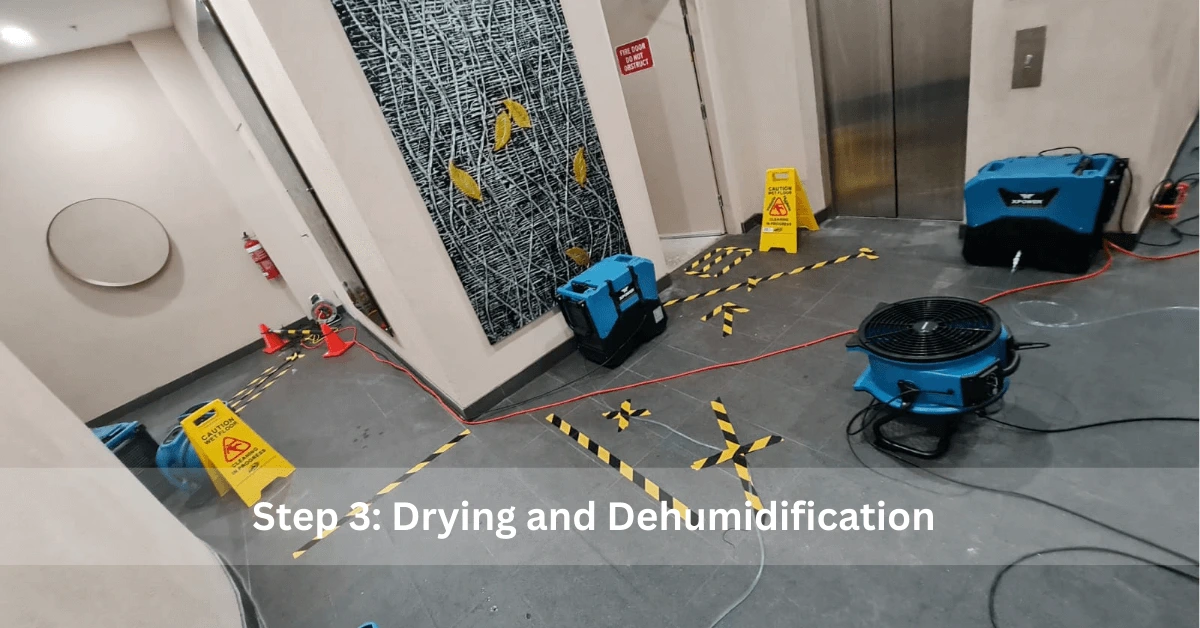
Even after all standing water has been removed, the most critical threat often remains hidden moisture. Water can seep deep into porous materials such as drywall, wood, insulation, and carpets, where it isn’t visible to the naked eye. If ignored, this trapped dampness can silently compromise structural strength, warp floors, peel paint, and trigger mould growth within just 24–48 hours.
To combat this, professionals use high-grade dryers, air movers, and industrial dehumidifiers designed to pull out moisture from even the hardest-to-reach areas. These machines not only accelerate evaporation but also regulate humidity levels, ensuring the indoor environment stabilises quickly. By addressing both surface and hidden dampness, drying and dehumidification create a safe, mould-free, and structurally sound space ready for full restoration.
Step 4: Cleaning and Sanitisation
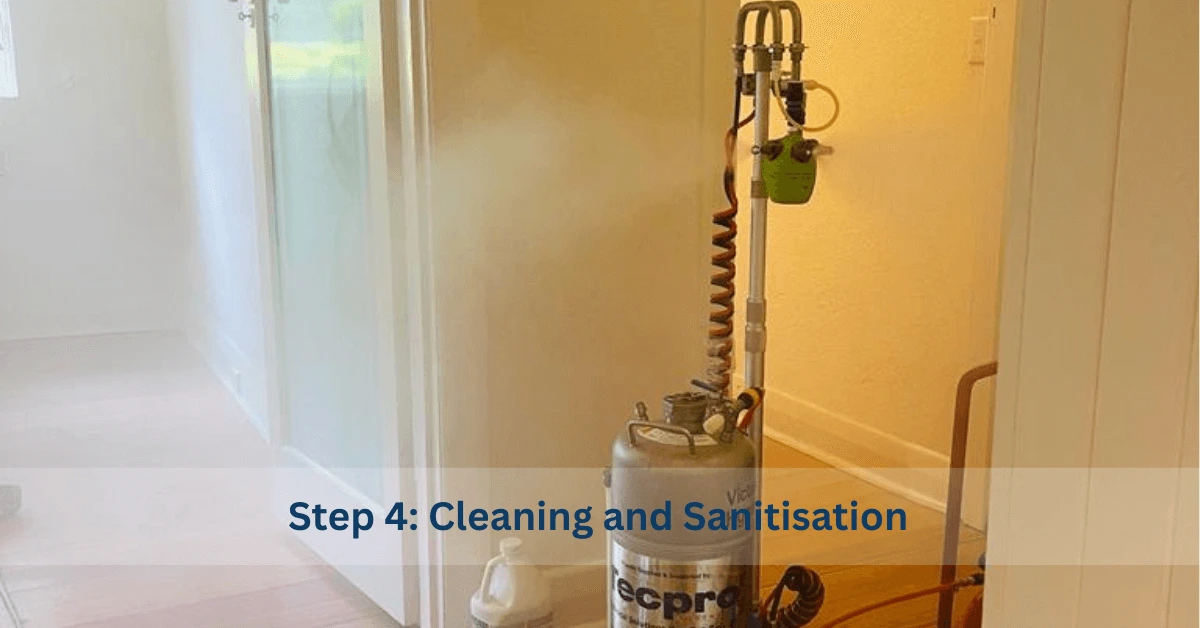
Once the space is dry, the next step is to clean and sanitise everything the water has touched. This isn’t just about making the area look clean, but it’s about making it safe to live or work in again. Furniture, carpets, walls, and even personal belongings are treated with professional-grade cleaning solutions to remove dirt, debris, and any harmful residue left behind by the water.
If the water damage came from contaminated sources such as sewage backups, stormwater, or flooding, sanitisation becomes even more critical. Strong disinfectants and antimicrobial treatments are used to kill bacteria, viruses, and mould spores that may have spread through the property. This ensures the environment is not only restored but also healthy and free from hidden risks that could affect your well-being in the future.
Step 5: Repairs and Restoration
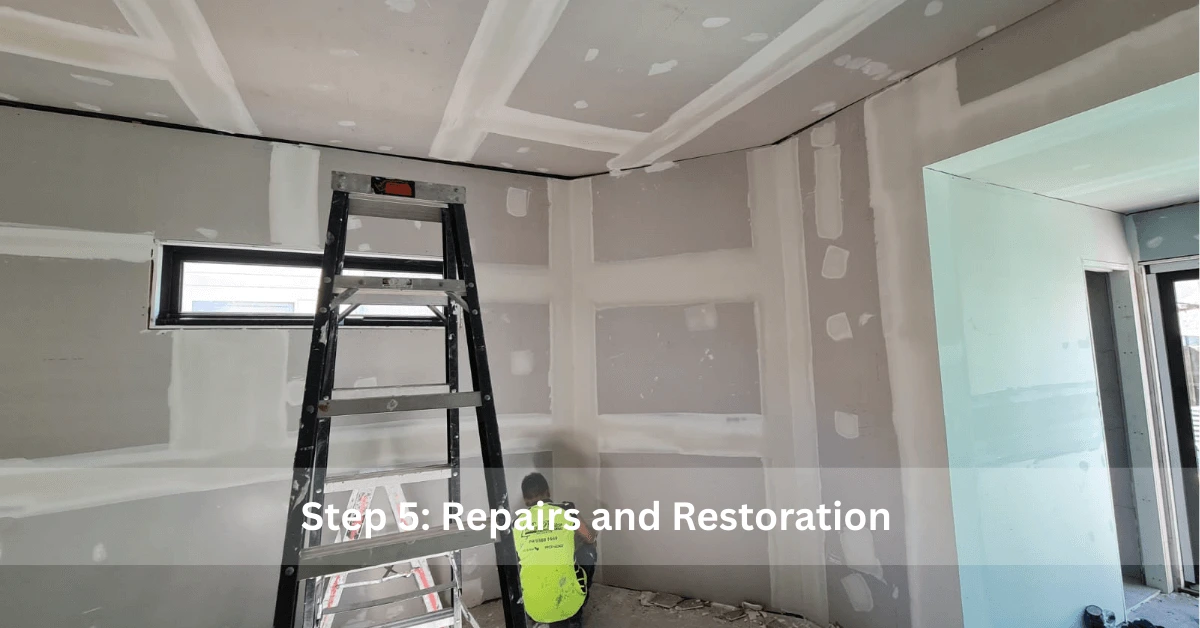
This water damage restoration step focuses on repairing and rebuilding what was damaged. Depending on the severity, this could be as minor as fixing drywall, repainting walls, or replacing a few floorboards or as extensive as reconstructing entire sections of the property. Skilled professionals make sure every repaired area blends seamlessly with the rest of the home or building, restoring not only its structure but also its appearance.
In cases of heavy damage, restoration might involve replacing roofing, insulation, or large sections of flooring to ensure the property is safe, stable, and fully functional again. The goal is to bring the space back to its pre-damage condition or better, so it feels like the water incident never happened. At this stage, the property is once again ready to be lived in or used without risk of lingering issues.
Step 6: Final Inspection and Air Quality Testing
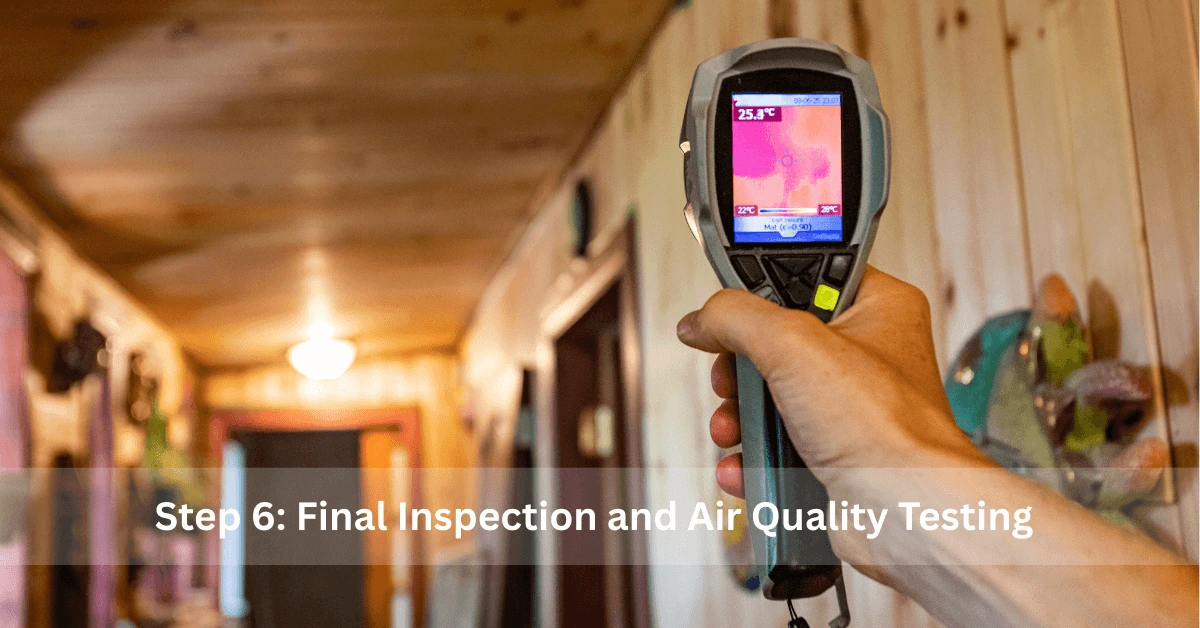
Once all restoration and repairs are complete, professionals conduct a thorough final inspection to ensure no issues have been overlooked. This step verifies that the property is structurally sound, fully restored, and safe to use. Every repaired area, from walls and floors to plumbing and electrical systems, is checked to confirm it meets safety standards.
In addition, air quality testing may be carried out to detect any hidden mould spores, bacteria, or lingering odours caused by water damage. Specialised equipment helps ensure the air is clean and healthy to breathe, providing peace of mind that the environment is truly safe for occupants. This final step completes the restoration process, leaving the property fresh, secure, and ready for normal use again.
Conclusion
Water damage can be devastating, but with the right approach, recovery is not only possible but it can also leave your property stronger and healthier than before. The water damage restoration process is a structured, step-by-step journey that goes beyond surface cleanup to ensure lasting safety, structural strength, and peace of mind.
By relying on experts who know how water restoration works, you protect your home or business from long-term damage, save on future repair costs, and ensure a safe environment for your family, staff, or customers.
If your property has suffered water damage, don’t wait. The faster you act, the better the outcome and the sooner life returns to normal.
Follow us on Instagram and LinkedIn for expert advice and updates.